
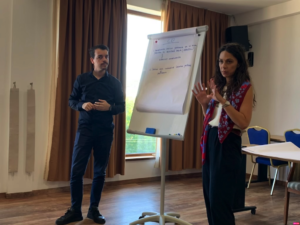
From 14 to 16 October 2024, Slovenian and Macedonian practitioners worked together on anonymised case files dealing with financial investigations, asset scope and reporting for prosecutors.
Organised by the European Development Academy, the working session brought together representatives of the Prosecutor’s Office, Financial Police, Customs and Police and focused on practical judgement, analytical structure and inter-institutional understanding.
The casework centred on a question that often determines the course of a file from the very beginning: when is a case being handled as an investigation of financial crime, when does it require a financial investigation linked to a specific offence, and when does broader financial-investigation logic become relevant for extended confiscation? By working directly from cases, participants compared opening criteria, trigger indicators, asset scope and early analytical steps, including the use of net-worth and disproportionality logic in first-stage screening.
A major part of the work was devoted to reporting for prosecutorial use. Mixed groups reviewed examples, identified weaknesses in structure and source discipline, and reworked findings into clearer report products. The aim was to improve the consistency, analytical value and practical usefulness of financial-investigation reporting, especially where later prosecutorial decisions and confiscation-oriented action depend on how clearly findings are organised and justified.
The value of the session lay in the direct comparison of Slovenian and North Macedonian practice through cases. By working from files rather than from abstract presentation, participants were able to test opening logic, compare institutional thresholds, examine how different authorities define the relevant asset picture, and build a more common professional language around financially relevant cases. In this way, the session supported both individual learning and stronger institutional coherence.
This work formed part of EDA’s broader capacity building programme for Macedonian authorities. The programme is structured around six modules and combines online preparation, guided assignments, live support and three in-person implementation sessions. The October 2024 block served as the practical implementation point for the themes of initiation logic, asset identification, net-worth analysis and prosecutor-usable reporting.
Its contribution therefore went beyond the immediate session itself: it helped translate course content into clearer working methods, stronger cross-institutional understanding and more usable reporting tools for continued financial-investigation practice in North Macedonia.
Representatives of four North Macedonian institutions (the Prosecutor’s Office, the Financial Police, Customs Officers, and the Police) and their corresponding colleagues from Slovenia

Analysing real-life cases from the perspectives of all four institutions
Thinking about similarities and differences between criminal investigations of financial crimes and financial investigations

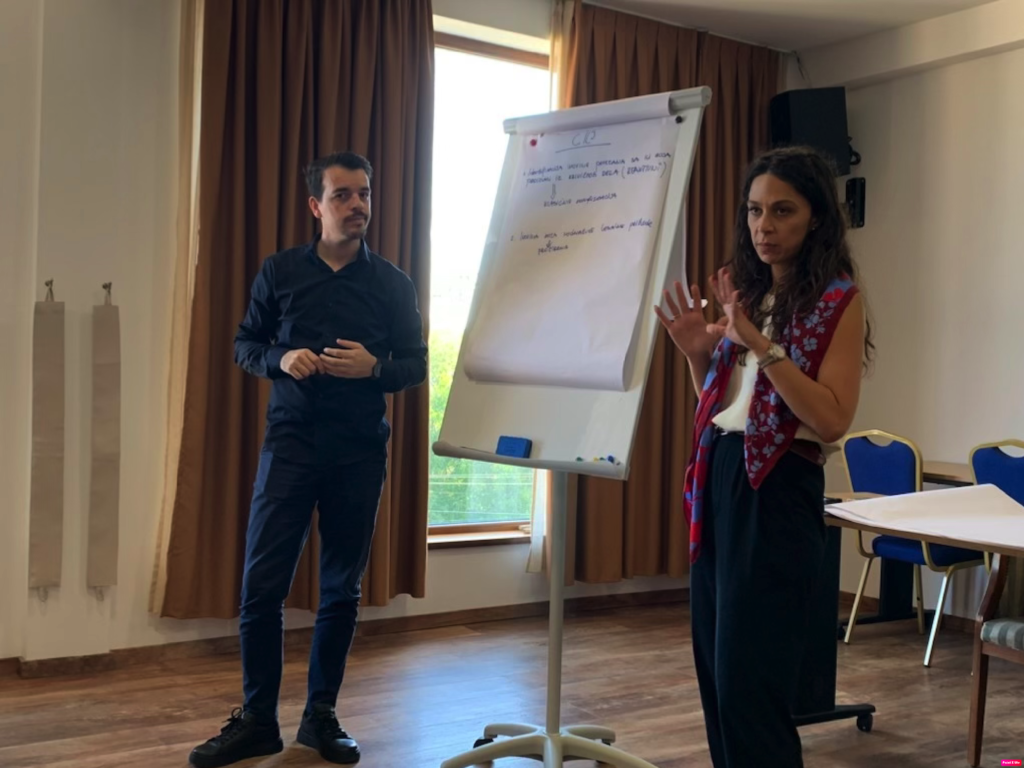
Sharing knowledge and experience with colleagues from other institutions