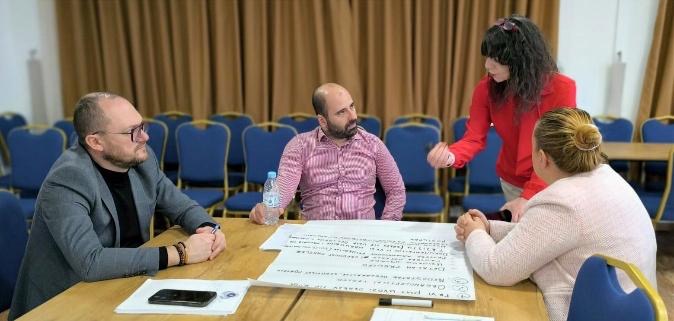
On 28–29 January 2026, the European Development Academy (EDA) held a practical working session in North Macedonia on the handling of cases arising from customs controls within its wider Capacity Building for Financial Investigation programme for Macedonian authorities. The wider programme runs from May 2024 to May 2026, and the January block was dedicated to customs indicators, routine irregularities as economic-benefit cases, escalation logic and institutional follow-through. After the in-person session, participants continued their work through guided online tasks and follow-up support.
Working from case-based exercises, participants examined how to map persons, entities, benefit and financial flows at an early stage, how to structure referral and escalation, and how to move files forward in a coordinated way once the financial dimension of a case has been identified. The emphasis was on practical handling, clear documentation and stronger continuity between first detection and later investigative steps.
The Slovenian expert team included Andreja Dolničar Jeraj, Dr Tatjana Dragovič, Damjana Slapar Burkat, Dragana Tomić Pilipovič, Jože Levašič and Bernard Močnik. Together with Macedonian participants, they worked on improving case handling, escalation discipline and coordinated follow-through in customs-related files.
The January 2026 block also produced practical outputs, including a referral and escalation dossier and an institutional micro-protocol with a personal commitment plan. These tools were intended to support clearer routines, stronger coordination and more consistent handling of customs cases in daily practice.
Within the wider course pathway, the January 2026 phase helped turn course content into practical routines and reusable tools that can continue to support financial-investigation work after the session itself.